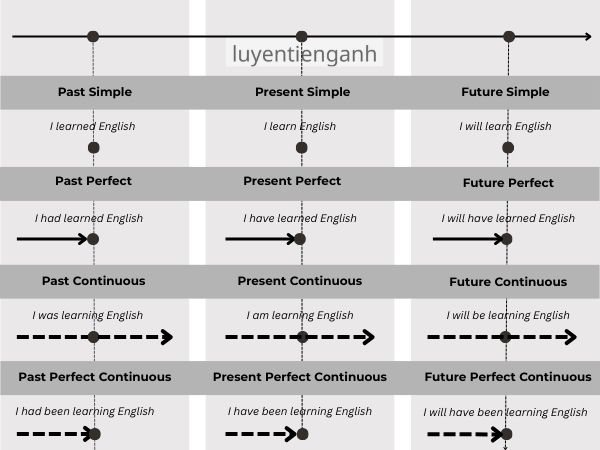
Thì quá khứ hoàn thành – Past Perfect dùng để diễn tả một hành động đã xảy ra và hoàn tất trước một hành động khác trong quá khứ.
Nói cách khác, đây là thì dùng để nhấn mạnh thứ tự thời gian của hai sự kiện trong quá khứ:
→ Hành động 1 (xảy ra trước) → Thì quá khứ hoàn thành
→ Hành động 2 (xảy ra sau) → Thì quá khứ đơn
Ví dụ thì quá khứ hoàn thành:
I had finished my homework before I went to bed. → Tôi đã làm xong bài tập trước khi tôi đi ngủ.She had left when I arrived. → Cô ấy đã rời đi khi tôi đến.
Đây là bài viết Thì quá khứ hoàn thành trong series 35 bài học ngữ pháp tiếng Anh chủ chốt. Hoàn tất series này, bạn sẽ có nền tảng ngữ pháp vững vàng.
List dưới đây là lộ trình học ngữ pháp chuẩn từ con số 0 : Học đúng thứ tự, bám sát từng bài để củng cố kiến thức bạn nhé:
Chặng 1:
Chặng 2:
Chặng 3:
Chặng 4:
Chặng 5:
Chặng 6:
Chặng 7:
Thì quá khứ hoàn thành A – Z Nếu bạn thường bị “ngợp” khi học tiếng Anh vì quá nhiều kiến thức, bạn đang ở đúng chỗ. Mỗi bài học của blog Kho tiếng Anh
Ngữ cảnh sử dụng thì quá khứ hoàn thành
NGỮ CẢNH GIẢI THÍCH VÍ DỤ
Mô tả một hành động xảy ra trước một sự kiện khác trong quá khứ Nói về điều gì đó đã xảy ra và hoàn tất trước một thời điểm hoặc sự kiện khác ở quá khứ . Hay đi với các từ như:
just, already…( thường đứng giữa “had ” và V3) .when, as soon as, by the time, after… always, sometimes, never, before, by + time.
The chef had just prepared the sauce when the guests arrived a few minutes later. By the time the guests came in, the catering team had already prepared all the dishes. His family were richer than they had ever been before.
Ai đó kể lại sự kiện trong quá khứ (reported events) Thể hiện rõ chuyện được kể đã xảy ra trước thời điểm người nói nhắc đến .
Khi ai đó kể lại một chuyện đã xảy ra trong quá khứ, câu nói của họ thường có hai lớp thời gian :
Thời điểm người đó kể lại chuyện → quá khứ (past simple)
Sự kiện mà họ kể → đã xảy ra trước thời điểm họ kể (past perfect)
He told me he had finished the project. My sister said she had lost her passport the day before. The applicant explained that he had worked in Japan for five years before returning home.
Các kỳ vọng không thành Nói về những hy vọng trong quá khứ , những điều đã mong chờ , nhưng thực tế không xảy ra. The coach had expected his team would reach the finals, but they lost in the first round. Emma had hoped to travel to Korea that summer, but her visa application was rejected.
Nhớ bookmark lại và chia sẻ bài học này vào trang cá nhân để ôn thi khi cần nghen ❤️
Công thức chia động từ trong thì quá khứ hoàn thành Công thức chia động từ thì quá khứ hoàn thành
Khẳng định S + had + V3/ed ( + C ) The old photographer had already taken the picturesThe group of tourists had explored that cave during their previous trip.
Phủ định S + had + not + V3/ed (+ C ) The woman had not booked her flight yetThe baker had not prepared enough dough for the morning rush.
Nghi vấn (Yes/No question)
Had + S + V3/ed (+ C)
Yes, S + had.
No, S + had not (hadn’t)
Had the art collector sold the painting yet?→ Yes, he had. → No, he hadn’t.
Wh-question Wh-question + had + S + V3/ed (+ C) ?(Wh-question = what, where, when, who, why, which, whose, how
Which book had your friend finished before the exam?→ She had finished the history book.
Chú thích công thức chia động từ thì quá khứ hoàn thành:
S Subject (Chủ ngữ)V3/ed Past participle (Quá khứ phân từ của động từ, bao gồm động từ bất quy tắc và có quy tắc)C Complement (Thành phần bổ nghĩa)
12 thì tiếng Anh Chi tiết về V3 – Past participle trong thì quá khứ hoàn thành Nếu thì quá khứ đơn dùng V2 để kể chuyện trong quá khứ, thì quá khứ hoàn thành dùng V3 để cho thấy câu chuyện đó ảnh hưởng tới bây giờ.
Bạn có thể hiểu đơn giản thế này: thì quá khứ hoàn thành là “quá khứ nhưng vẫn liên quan đến quá khứ”. Và V3 chính là dạng động từ dùng để nói điều đó. Vì vậy, muốn áp dụng đúng công thức ở trên, bạn cần nắm rõ cách tạo V3.
V3 gồm hai loại:
Động từ có quy tắc (Regular Verbs) → thêm –ed vào phía sau. Ví dụ:Động từ bất quy tắc (Irregular Verbs) → học thuộc lòng. Ví dụ: take → taken, go → gone…
Bảng động từ có quy tắc
add deliver enjoy like open start
agree describe explain listen order stay
answer die fill live paint stop
ask divide finish look park study
arrive drop follow love pass talk
believe earn form laugh play thank
behave end guess manage plan travel
call enjoy happen mark plant try
change explain hate marry pour touch
clean fill help match pull use
close finish hope miss rain visit
collect follow imagine move reach wait
compare form improve need remember walk
cook guess include notice repeat want
copy happen invite open return wash
count hate join order search watch
cry help jump paint seem work
dance hope kill park shout worry
decide imagine learn pass smile wish
Ghi nhớ về bảng động từ có quy tắc
Động từ kết thúc bằng –e [-d] like → liked, love → loved, move → moved Động từ kết thúc bằng phụ âm + y [ đổi y thành i + ed] study → studied, try → tried, carry → carried Động từ một âm tiết, kết thúc bằng consonant–vowel–consonant [ gấp đôi phụ âm cuối + ed] stop → stopped, plan → planned, chat → chatted
Bảng động từ bất quy tắc
V1 V2 V3 Nghĩa Ví dụ
awake awoke awoken đánh thức, thức
I awoke early this morning.
be (am/is/are) was/were been thì, là, bị, ở
I was at school yesterday.
beat beat beaten/ beat đánh, đập, đánh bại
Our team beat their team 2–1.
befall befell befallen xảy đến
A big storm befell the town last night.
behold beheld beheld ngắm nhìn
We beheld a beautiful rainbow after the rain.
beset beset beset bao quanh
The village was beset by floods.
bet bet/ betted bet/ betted
I bet you can’t run faster than me.
bide abode/ abided abode/ abided lưu trú, lưu lại
We decided to bide here until the rain stopped.
bind bound bound buộc, trói
bleed bled bled chảy máu
break broke broken đập vỡ
bring brought brought mang đến
browbeat browbeat browbeaten/ browbeat hăm dọa
burn burnt/ burned burnt/ burned đốt, cháy
bust busted/ bust busted/ bust làm bể, làm vỡ
cast cast cast ném, tung
chide chid/ chided chid/ chidden/ chided mắng, chửi
cleave clove/ cleft/ cleaved cloven/ cleft/ cleaved chẻ, tách hai
cling clung clung
come came come đến, đi đến
creep crept crept bò, trườn, lẻn
crow crew/ crewed crowed gáy (gà)
daydream daydreamed/ daydreamt daydreamed/ daydreamt
dig dug dug đào
dive dove/ dived dived lặn, lao xuống
draw drew drawn vẽ, kéo
drink drank drunk uống
dwell dwelt dwelt trú ngụ, ở
fall fell fallen ngã, rơi
feel felt felt cảm thấy
find found found tìm thấy, thấy
flee fled fled chạy trốn
fly flew flown bay
forbid forbade/ forbad forbidden cấm, cấm đoán
forego (also forgo) forewent foregone bỏ, kiêng
foretell foretold foretold đoán trước
forgive forgave forgiven tha thứ
freeze froze frozen (làm) đông lại
get got got/ gotten có được
gird girt/ girded girt/ girded đeo vào
go went gone đi
grow grew grown mọc, trồng
handwrite handwrote handwritten viết tay
have had had có
heave hove/ heaved hove/ heaved trục lên
hide hid hidden giấu, trốn, nấp
hurt hurt hurt làm đau
inlay inlaid inlaid cẩn, khảm
inset inset inset dát, ghép
interweave interwove/ interweaved interwoven/ interweaved trộn lẫn, xen lẫn
jerry-build jerry-built jerry-built
kneel knelt/ kneeled knelt/ kneeled quỳ
know knew known biết, quen biết
lead led led
leap leapt leapt nhảy, nhảy qua
leave left left ra đi, để lại
let let let
light lit/ lighted lit/ lighted thắp sáng
lose lost lost làm mất, mất
mean meant meant có nghĩa là
miscast miscast miscast
misdo misdid misdone phạm lỗi
mislay mislaid mislaid để lạc mất
mislearn mislearned/ mislearnt mislearned/ mislearnt học nhầm
misset misset misset đặt sai chỗ
misspell misspelt misspelt viết sai chính tả
mistake mistook mistaken
misunderstand misunderstood misunderstood hiểu lầm
mow mowed mown/ mowed cắt cỏ
outbid outbid outbid trả hơn giá
outdo outdid outdone làm giỏi hơn
outdrink outdrank outdrunk uống quá chén
outfight outfought outfought đánh giỏi hơn
outgrow outgrew outgrown lớn nhanh hơn
outlie outlied outlied nói dối
outride outrode outridden
outsell outsold outsold bán nhanh hơn
outshoot outshot outshot
bắn giỏi hơn, nảy mầm, mọc
outsit outsat outsat ngồi lâu hơn
outsmell outsmelled/ outsmelt outsmelled/ outsmelt
khám phá, đánh hơi, sặc mùi
outspeed outsped outsped đi/chạy nhanh hơn
outswear outswore outsworn
outthink outthought outthought
outwrite outwrote outwritten viết nhanh hơn
overbreed overbred overbred nuôi quá nhiều
overbuy overbought overbought mua quá nhiều
overdo overdid overdone
overdrink overdrank overdrunk uống quá nhiều
overfeed overfed overfed cho ăn quá mức
overhang overhung overhung
nhô lên trên, treo lơ lửng
overlay overlaid overlaid phủ lên
override overrode overridden lạm quyền
oversee oversaw overseen trông nom
oversew oversewed oversewn/ oversewed may nối vắt
oversleep overslept overslept ngủ quên
overspend overspent overspent tiêu quá lố
overtake overtook overtaken đuổi bắt kịp
overthrow overthrew overthrown lật đổ
overwrite overwrote overwritten
viết dài quá, viết đè lên
pay paid paid trả (tiền)
prebuild prebuilt prebuilt làm nhà tiền chế
premake premade premade làm trước
presell presold presold
bán trước thời gian rao báo
preshrink preshrank preshrunk
ngâm cho vải co trước khi may
prove proved proven/ proved chứng minh
quick-freeze quick-froze quick-frozen kết đông nhanh
quit quit/ quitted quit/ quitted bỏ
reawake reawoke reawaken
rebind rebound rebound buộc lại, đóng lại
rebuild rebuilt rebuilt xây dựng lại
recut recut recut cắt lại, băm
redo redid redone làm lại
refit refitted/ refit refitted/ refit luồn, xỏ
regrow regrew regrown trồng lại
rehear reheard reheard
relay relaid relaid đặt lại
relearn relearned/ relearnt relearned/ relearnt học lại
remake remade remade
repay repaid repaid hoàn tiền lại
rerun reran rerun
resend resent resent gửi lại
resew resewed resewn/ resewed may/khâu lại
reteach retaught retaught dạy lại
retell retold retold kể lại
retread retread retread lại giẫm/đạp lên
rewake rewoke/ rewaked rewaken/ rewaked đánh thức lại
reweave rewove/ reweaved rewoven/ reweaved dệt lại
rewet rewet/ rewetted rewet/ rewetted làm ướt lại
rewind rewound rewound
rid rid rid giải thoát
ring rang rung rung chuông
roughcast roughcast roughcast
sand-cast sand-cast sand-cast
say said said nói
seek sought sought tìm kiếm
send sent sent gửi
sew sewed sewn/ sewed may
shave shaved shaved/ shaven cạo (râu, mặt)
shed shed shed rơi, rụng
shit shit/ shat/ shitted shit/shat/shitted đại tiện
show showed shown/ showed cho xem
shut shut shut đóng lại
sing sang sung ca hát
sit sat sat ngồi
sleep slept slept ngủ
sling slung slung ném mạnh
slit slit slit rạch, khứa
smite smote smitten đập mạnh
speak spoke spoken nói
spell spelt/ spelled spelt/ spelled đánh vần
spill spilt/ spilled spilt/ spilled tràn, đổ ra
spoil spoilt/ spoiled spoilt/ spoiled làm hỏng
stand stood stood đứng
stick stuck stuck ghim vào, đính
stink stunk/stank stunk bốc mùi hôi
strike struck struck đánh đập
sunburn sunburned/ sunburnt sunburned/ sunburnt cháy nắng
sweat sweat/ sweated sweat/ sweated đổ mồ hôi
swell swelled swollen/ swelled phồng, sưng
swing swung swung đong đưa
teach taught taught dạy, giảng dạy
telecast telecast telecast phát đi bằng truyền hình
think thought thought suy nghĩ
thrust thrust thrust thọc, nhấn
typewrite typewrote typewritten đánh máy
unbind unbound unbound mở, tháo ra
undercut undercut undercut ra giá rẻ hơn
undergo underwent undergone kinh qua
understand understood understood hiểu
underwrite underwrote underwritten bảo hiểm
unfreeze unfroze unfrozen làm tan đông
unhide unhid unhidden
unspin unspun unspun quay ngược
uphold upheld upheld ủng hộ
wake woke/ waked woken/ waked thức giấc
wed wed/ wedded wed/ wedded kết hôn
wet wet/ wetted wet/ wetted làm ướt
wind wound wound quấn
withhold withheld withheld từ khước
work worked worked
write wrote written viết
Để kiến thức thì quá khứ hoàn thành ở lại lâu hơn, bạn cùng thực hành bài tập với Kho tiếng Anh nhé:
Ghi nhớ nhanh khi làm bài tập thì quá khứ hoàn thành:
Chỉ dùng khi có 2 hành động quá khứ.
Cái xảy ra TRƯỚC → had + V3 Cái xảy ra SAU → V2/ed.
Gặp “by the time ” là đóng khung luôn: By the time + V2, … had + V3 .
Bài tập thì quá khứ hoàn thành
*Chọn đáp án đúng thì quá khứ hoàn thành
The archive manager couldn’t open the safe because someone ___ the password. A had changed · B changed · C has changed · D was changing
By the time the old ferry reached the harbor, the storm ___ across the entire coast. A spread · B has spread · C had spread · D spreads
The young sculptor was frustrated because her clay ___ overnight.
A hardened · B hardens · C has hardened · D had hardened
When the rescue team arrived, the hikers ___ their last signal flare. A used · B use · C had already used · D have used
The museum guide explained that the ancient monument ___ centuries earlier. A collapsed · B collapses · C has collapsed · D had collapsed
Before the exam committee met, the head examiner ___ all the files.
A reviewed · B had reviewed · C has reviewed · D reviews
The violinist panicked because she ___ her solo part before rehearsal. A hadn’t memorized · B didn’t memorize · C doesn’t memorize · D hasn’t memorized
The software team discovered bugs because the previous developer ___ the code properly. A hasn’t tested · B didn’t test · C hadn’t tested · D doesn’t test
The historian said the royal family ___ the castle long before it became a museum.
A has abandoned · B abandoned · C had abandoned · D abandons
The art critic was surprised because the painter ___ such a realistic portrait before. A didn’t create · B had never created · C has never created · D never created
By the time the train operator arrived, the maintenance crew ___ the engine. A repairs · B repaired · C has repaired · D had repaired
The gardener realized the rare tree ___ after the frost.
A dies · B died · C has died · D had died
The lecturer said the chemistry team ___ that experiment many times before the accident. A had performed · B performed · C performs · D has performed
After the exhibition ended, the organizers discovered visitors ___ with the labels. A tampered · B had tampered · C tampers · D has tampered
By the time the novelist signed her contract, she ___ dozens of drafts.
A wrote · B writes · C had written · D has written
The conductor complained that the sound engineers ___ the cables incorrectly. A arranged · B had arranged · C arrange · D has arranged
The project manager felt relieved because the interns ___ all the data earlier. A has entered · B entered · C had entered · D enter
The professor said the ancient tribe ___ that language long before modern records.
A spoke · B had spoken · C speaks · D has spoken
(Bài tập Thì quá khứ hoàn thành)
*Chia động từ thì quá khứ hoàn thành
When the mountain guides arrived, the lost backpackers ___ (use) all their food. The librarian looked upset because someone ___ (tear) several pages from the rare book.
By the time the antique dealer opened the shop, a collector ___ already ___ (buy) the vase.
The young composer was shocked when he realized he ___ never ___ (hear) that melody before. The chef couldn’t finish the dish because her assistant ___ (forget) the main ingredient.
The historians confirmed that the ancient tribe ___ (settle) in the valley long before others.
When the emergency crew reached the barn, the fire ___ already ___ (reach) the roof. The old filmmaker said he ___ (lose) all his early recordings during the flood.
After the rehearsal ended, the choir members discovered someone ___ (move) all the sheet music.
The gardener felt relieved because the rare orchid ___ finally ___ (bloom) after many attempts. Before the inspectors arrived, the factory workers ___ (complete) most of the tasks.
The novelist complained that the editor ___ (change) several chapters without notice.
By the time the astronomy club met, the president ___ already ___ (explain) the new telescope rules. The violin teacher realized her students ___ never ___ (practice) the duet together.
When the archaeologists returned to the site, heavy rain ___ (wash) away the footprints.
The museum director was surprised because the sculpture ___ (crack) despite perfect storage. The wildlife photographer felt disappointed because the bird ___ (fly) away before sunrise.
Before the guests arrived, the event organizers ___ already ___ (prepare) all decorations. (Thì quá khứ hoàn thành)
(Bài tập Thì quá khứ hoàn thành)
*Tìm lỗi sai thì quá khứ hoàn thành
The museum guide had known the visitors from France last year. When the art critics arrived, the sculptor finished the statue she had worked on.
The research team discovered that the glacier had melt during the storm.
By the time the theatre opened, the actors had rehearsed on stage last night only. The elderly writer said he had wrote twelve novels before retiring.
After the choir performance ended, the conductor realized someone had took his folder.
Before the investors came, the engineering team built a full prototype they had promised. The chef complained that the seafood had spoiled yesterday morning.
When the hikers returned to camp, they noticed the wind had blow the tent away.
The biology professor explained she had knew about the virus years before it spread. By the time the guests arrived, the hotel staff prepared all the rooms.
The orchestra members were upset because the violinist had broke the new bow.
The historian wrote that the ancient kingdom had existed only in the past century. After the conference ended, the coordinator found that several participants had left early yesterday.
When the rescue team reached the cabin, they realized the storm had damaged it for hours.
Before the painter exhibited his work, he had finish restoring the final canvas. The old librarian admitted she had lost the archive last week.
The astronomer was surprised because the meteor had appeared last night suddenly. (Thì quá khứ hoàn thành)
(Bài tập Thì quá khứ hoàn thành)
***Đáp án bài tập thì quá khứ hoàn thành
*Chọn đáp án đúng thì quá khứ hoàn thành
The archive manager couldn’t open the safe because someone had changed the password. By the time the old ferry reached the harbor, the storm had spread across the entire coast.
The young sculptor was frustrated because her clay had hardened overnight.
When the rescue team arrived, the hikers had already used their last signal flare. The museum guide explained that the ancient monument had collapsed centuries earlier.
Before the exam committee met, the head examiner had reviewed all the files.
The violinist panicked because she hadn’t memorized her solo part before rehearsal. The software team discovered bugs because the previous developer had tested the code properly.
The historian said the royal family had abandoned the castle long before it became a museum.
The art critic was surprised because the painter had never created such a realistic portrait before. By the time the train operator arrived, the maintenance crew had repaired the engine.
The gardener realized the rare tree had died after the frost.
The lecturer said the chemistry team had performed that experiment many times before the accident. After the exhibition ended, the organizers discovered visitors had tampered with the labels.
By the time the novelist signed her contract, she had written dozens of drafts.
The conductor complained that the sound engineers had arranged the cables incorrectly. The project manager felt relieved because the interns had entered all the data earlier.
The professor said the ancient tribe had spoken that language long before modern records. (Thì quá khứ hoàn thành)
(Bài tập Thì quá khứ hoàn thành)
*Chia động từ thì quá khứ hoàn thành
When the mountain guides arrived, the lost backpackers had used all their food. The librarian looked upset because someone had torn several pages from the rare book.
By the time the antique dealer opened the shop, a collector had already bought the vase.
The young composer was shocked when he realized he had never heard that melody before. The chef couldn’t finish the dish because her assistant had forgotten the main ingredient.
The historians confirmed that the ancient tribe had settled in the valley long before others.
When the emergency crew reached the barn, the fire had already reached the roof. The old filmmaker said he had lost all his early recordings during the flood.
After the rehearsal ended, the choir members discovered someone had moved all the sheet music.
The gardener felt relieved because the rare orchid had finally bloomed after many attempts. Before the inspectors arrived, the factory workers had completed most of the tasks.
The novelist complained that the editor had changed several chapters without notice.
By the time the astronomy club met, the president had already explained the new telescope rules. The violin teacher realized her students had never practiced the duet together.
When the archaeologists returned to the site, heavy rain had washed away the footprints.
The museum director was surprised because the sculpture had cracked despite perfect storage. The wildlife photographer felt disappointed because the bird had flown away before sunrise.
Before the guests arrived, the event organizers had already prepared all decorations. (Thì quá khứ hoàn thành)
(Bài tập Thì quá khứ hoàn thành)
*Tìm lỗi sai thì quá khứ hoàn thành
The museum guide knew the visitors from France last year. When the art critics arrived, the sculptor had finished the statue she had worked on.
The research team discovered that the glacier had melted during the storm.
By the time the theatre opened, the actors had rehearsed on stage. (“last night” sai vì dùng past perfect) The elderly writer said he had written twelve novels before retiring.
After the choir performance ended, the conductor realized someone had taken his folder.
Before the investors came, the engineering team had built a full prototype they had promised. The chef complained that the seafood had spoiled (yesterday morning sai vì dùng past perfect).
When the hikers returned to camp, they noticed the wind had blown the tent away.
The biology professor explained she had known about the virus years before it spread. By the time the guests arrived, the hotel staff had prepared all the rooms.
The orchestra members were upset because the violinist had broken the new bow.
The historian wrote that the ancient kingdom had existed (không lỗi). After the conference ended, the coordinator found that several participants had left early. (“yesterday” sai với past perfect)
When the rescue team reached the cabin, they realized the storm had been damaging it for hours.
Before the painter exhibited his work, he had finished restoring the final canvas. The old librarian admitted she lost the archive last week. (thời điểm rõ → simple past)
The astronomer was surprised because the meteor appeared last night. (thời điểm rõ → simple past)
(Bài tập Thì quá khứ hoàn thành)